National Oceanic and Atmospheric Administration
Louisiana Marine Mammal Restoration Strategy
An activity of the NOAA DARRP Cooperative Agreement
Ongoing
The Challenge
To be successful, a marine mammal restoration strategy must consider multiple challenges specific to Louisiana such as remote locations, logistical constraints, capacity and experience, competing interests, limited funds, available local support, uncertainty in marine mammal threats and stressors, and changing environmental conditions. Addressing these challenges requires a robust strategy that identifies potential options for restoring marine mammals with an emphasis on coordinating with partners and stakeholders—academic institutions, non-government experts, researchers, local fishing communities, state agencies, NOAA, and others—to co-produce, implement, and evaluate actions that ultimately result in a long-term sustainable community of care for bottlenose dolphins in Louisiana. Thus, successful implementation will require cooperation, collaboration, and partnerships and consider partner/stakeholder interests from the beginning.
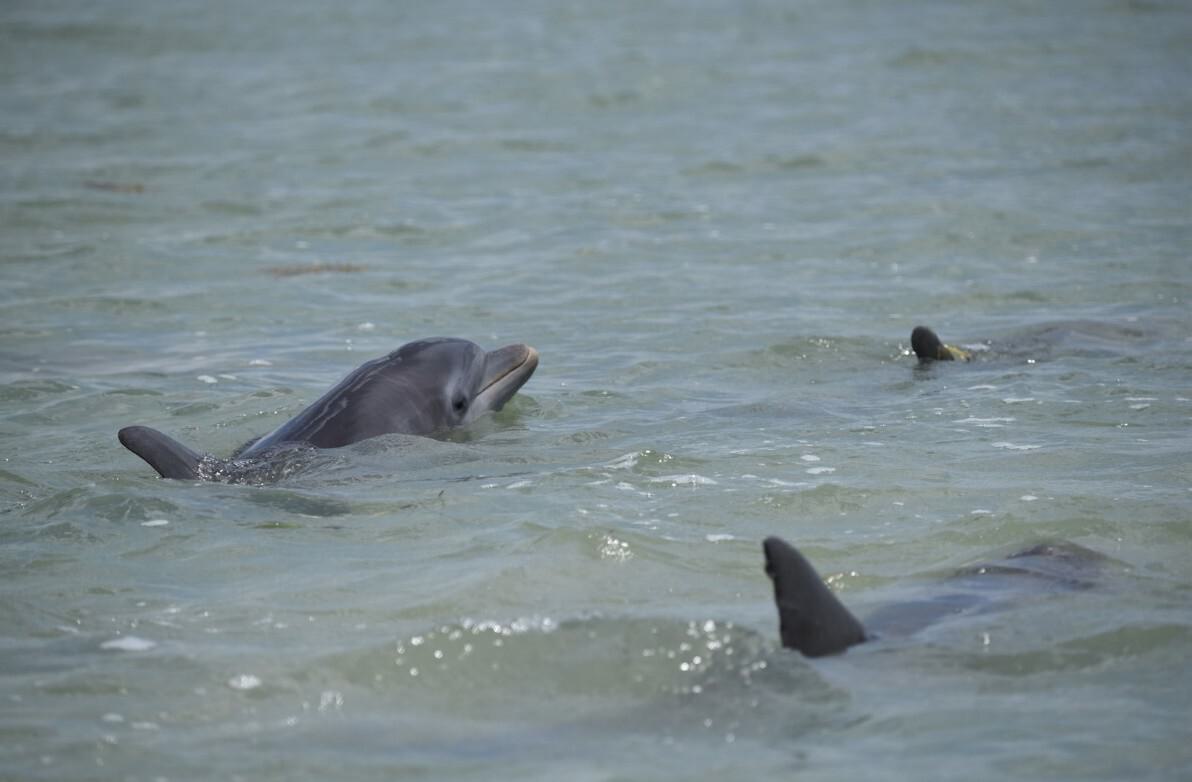
Photo Credit: Dolphin Ecology Project NMFS permit number 27867
The Approach
To effectively restore marine mammals in Louisiana and efficiently administer the remaining funds, the LA TIG funded the development of Strategic Priorities for Marine Mammals in Louisiana. The Water Institute and NOAA have been working collaboratively on a strategic plan that identifies the intersection with relevant PDARP restoration approaches, articulates objectives for how they can be operationalized strategically in Louisiana as a portfolio, and prioritizes them for funding in the short and near term. While the PDARP describes a number of restoration approaches that are applicable to marine mammals in Louisiana, successful implementation will depend on developing appropriate capacity and partnerships at the community and state level.
The Strategy will identify key partnerships, potential restoration actions and projects, engagement needs and opportunities, short- and long-term priorities and their connection to other relevant marine mammal restoration and Monitoring and Adaptive Management (MAM) activities by groups with a geographic interest in Louisiana.
Stay tuned for more information in Summer 2026!
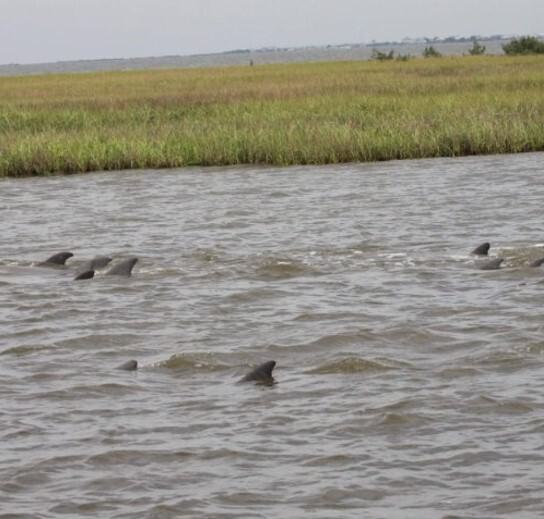
Photo Credit: National Marine Mammal Foundation
KEY TEAM MEMBERS