Federal Emergency Management Agency
Improving Access to Flood Resources in Northeast Louisiana
Under the FEMA Cooperative Technical Partnership (CTP) Initiative
The Challenge
Residents need access to reliable information before, during, and after a flood event. However, that information is often spread across multiple local, state, and federal sources, making it difficult for residents to know where to begin or which resources apply to their situation.
The Water Institute sought a trusted local partner to connect communities in the Lower Ouachita Watershed with flood risk information and resources. That organization, the United Way of Northeast Louisiana, serves a 12 parish area that significantly overlaps with the watershed.
United Way already served as an established source of community information and assistance, including through its 211 program. However, residents and 211 operators needed additional flood-specific information to more easily locate trusted resources for preparedness, response, and recovery.
The Approach
The Water Institute and United Way of Northeast Louisiana used community outreach and direct engagement to better understand what flood information residents needed.
At the City of Monroe Housing Fair & Expo, Institute staff shared flood-risk information, emphasized the importance of understanding flood hazards when purchasing a home, and worked directly with residents using local flood maps and FEMA resources. Attendees could identify their location on flood maps and talk with Institute staff about flood zones and available resources.
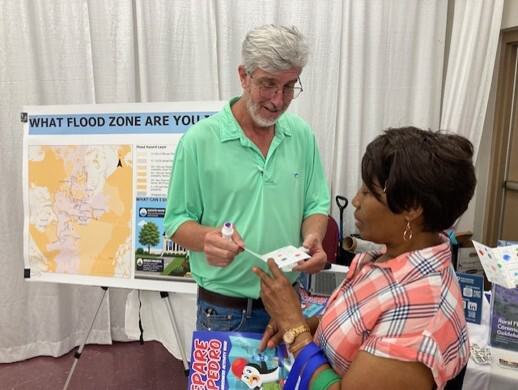
Questions received during the event showed that residents were particularly interested in what actions to take before, during, and after flooding. That feedback helped shape how the organization developed the resources in the next phase of the project.
The Institute and United Way then worked together to expand and reorganize flood information available through the United Way website. Institute communications staff curated trusted local, state, and federal resources and developed webpage content around common community needs, including understanding flood risk, reviewing insurance information, preparing households, staying safe during flooding, reporting damage, and finding recovery assistance.
The resources were organized primarily around actions residents may need to take before, during, and after a flood and were designed to fit within United Way’s existing website and brand. Where appropriate, the page directs users to additional maps, guides, tools, and resources maintained by other agencies and organizations. View the webpage developed here.
The project also included development of a streamlined guide for United Way’s 211 operators. The guide allows operators to quickly locate relevant flood information, assist callers, and share resources by phone, text, or email. This approach created multiple ways for residents to access the same trusted information, either independently through the United Way website or with assistance from a 211 operator.
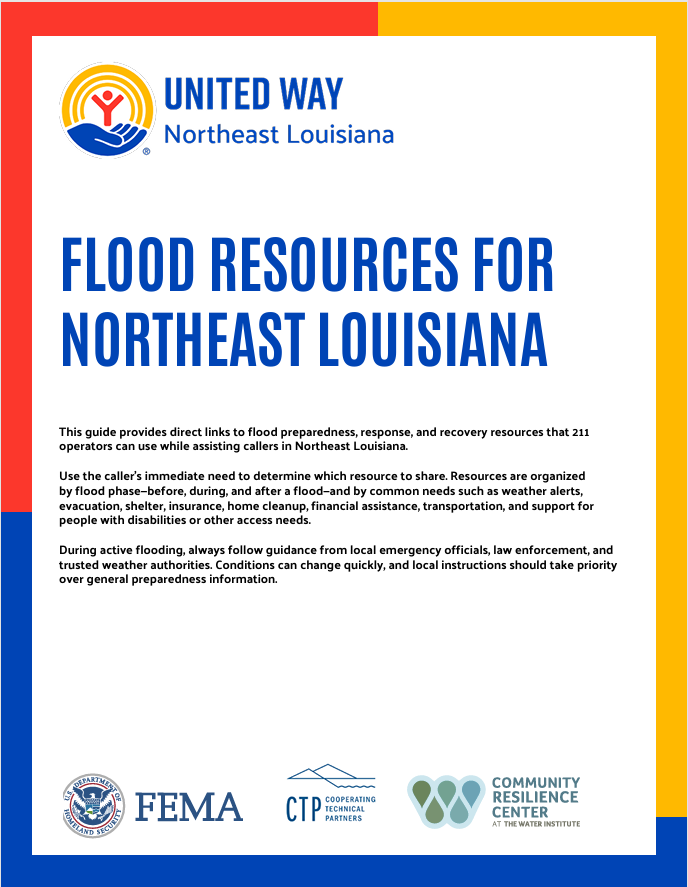
A second community resilience meeting brought together United Way 211 operators and representatives from other organizations to introduce the new resources, demonstrate how to use them, and discuss additional opportunities to share flood preparedness and emergency information throughout the region.
The Water Institute also worked alongside United Way of Northeast Louisiana and a local micro-influencer with a large social media following to help promote the new resources. Together, the partners developed social media posts, videos, and other materials designed to raise awareness of the flood resources, encourage residents to use them, and reinforce the importance of making a plan before flooding occurs.
KEY TEAM MEMBERS