National Oceanic and Atmospheric Administration
Louisiana Marine Mammal Restoration Strategy
An activity of the NOAA DARRP Cooperative Agreement
Completed 2026
The Challenge
The Strategy must identify key partnerships, potential restoration actions and projects, engagement needs and opportunities, short- and long-term priorities, and their connection to other relevant marine mammal restoration and Monitoring and Adaptive Management (MAM) activities by groups with a geographic interest in Louisiana.
To be successful, the Strategy must consider multiple challenges specific to Louisiana such as remote locations, logistical constraints, capacity and experience, competing interests, limited funds, available local support, uncertainty in marine mammal threats and stressors, and changing environmental conditions. Addressing these challenges requires a robust strategy that identifies potential options for restoring marine mammals with an emphasis on coordinating with partners and stakeholders to co-produce, implement, and evaluate actions that ultimately result in a long-term sustainable community of care for bottlenose dolphins in Louisiana. Successful implementation will require cooperation, collaboration, and partnerships and consider partner/stakeholder interests from the beginning. Therefore, developing a successful Strategy requires a transparent, objectives, and outcome-orientated approach to development.
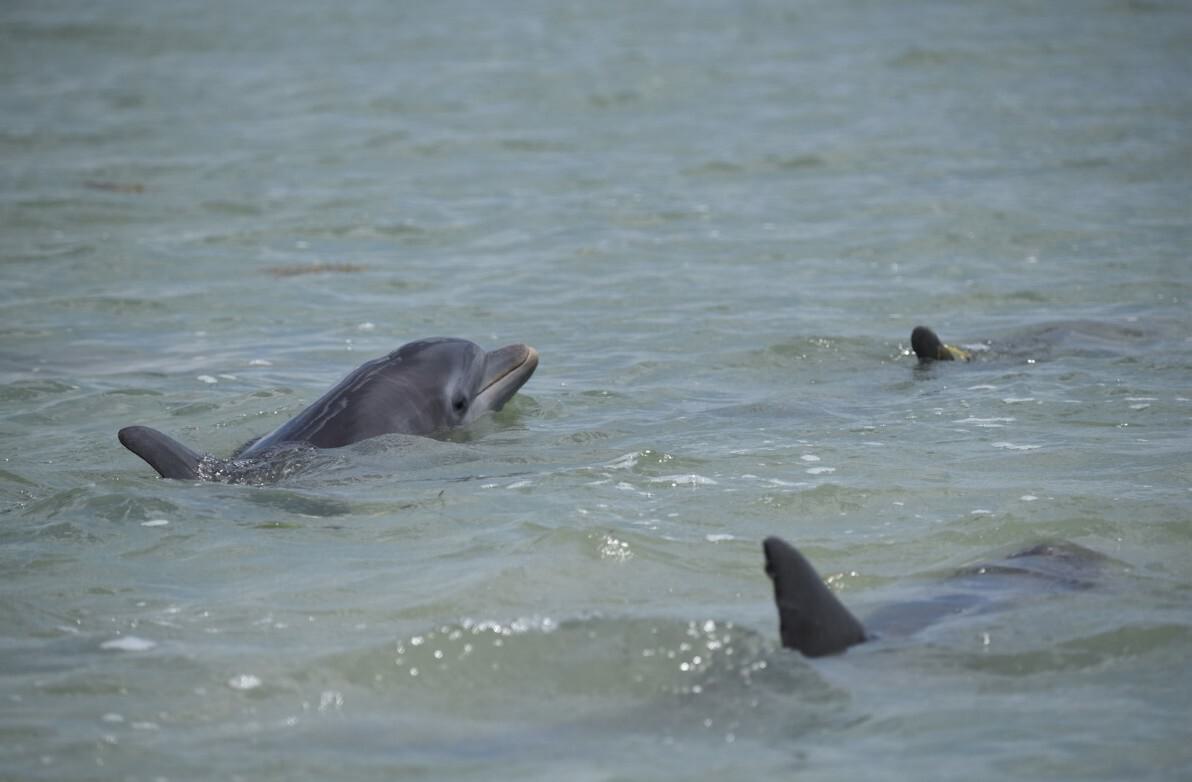
Photo Credit: Dolphin Ecology Project NMFS permit number 27867
The Approach
The Water Institute and NOAA used a rapid-prototyping Structured Decision-Making process and conceptual modeling to identify potential activities and partnerships for marine mammal restoration in Louisiana. SDM is systematic process that supports decision-making based on clear identification of objectives and goals. SDM can leverage tools and information – including the input of experts in the field - to project the deliberate and unintended consequences of decisions and uses concrete metrics in evaluating the costs and benefits of alternatives, such as potential marine mammal restoration decisions.
The Water Institute began by developing a framework to guide discussion and elicit input from marine mammal Subject Matter Experts and partners regarding the stressors, threats, and priorities for marine mammals in Louisiana. This input was critical to building the Strategy, and in combination with a literature review and was used to identify potential alternate marine mammal restoration actions. NOAA and the Institute also identified categories of partners that are key to Strategy implementation, and held a series of targeted partnership workshops to gain an understanding of how these partner types may be able to support marine mammal restoration activities. The information elicited in the workshops were used to further refine a targeted list of potential actions to be considered for marine mammal restoration in Louisiana. The Institute and NOAA used this input to develop a programmatic framework for restoration, monitoring, and adaptive management, as well as conceptual diagrams for applying that framework to a set of high-value potential restoration actions.
Outcomes of this effort include the following:
- Literature review of prior work in Louisiana relevant to marine mammal restoration or monitoring and adaptive management;
- Summary of input from working sessions with Subject Matter Experts with expertise relevant to Louisiana marine mammals and their restoration;
- A description of the methods used for partnership engagement and rapid prototyping SDM;
- The Louisiana Marine Mammal Restoration Strategy
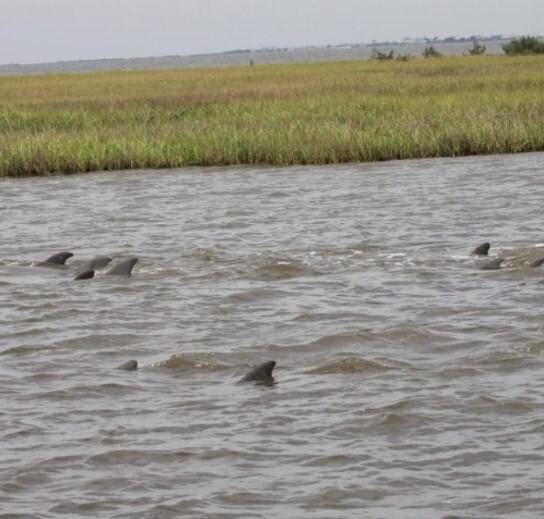
Photo Credit: National Marine Mammal Foundation
KEY TEAM MEMBERS